
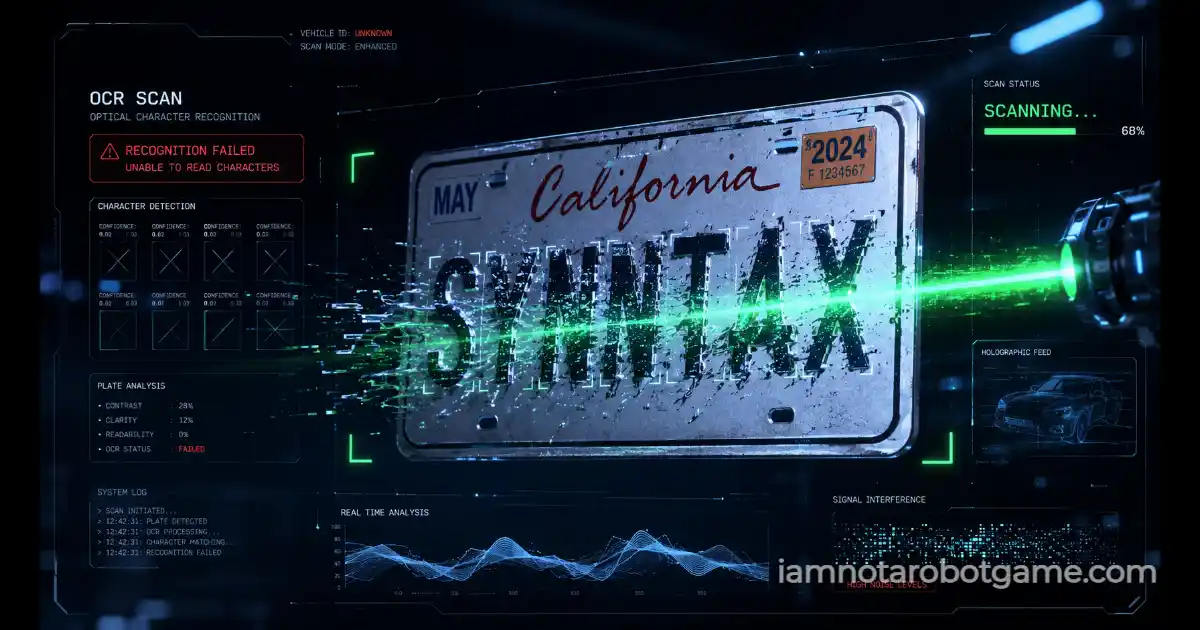
 Fig 1: The simulated low-resolution CCTV camera feed evaluating optical transcription.
Understanding the Low-Fidelity Video Feed
Welcome to Level 8: License Plate. Progressing through the binary trigger of Level 1: The Checkbox, the street sign segmentation of Level 2: Stop Signs, the dynamic displacement waves of Level 3: Wiggles, the botanical taxonomy of Level 4: Vegetables, the spatial angular correction of Level 5: Rotation, the strategic stalemate of Level 6: XOXO, and the lexical matrix of Level 7: Word Search, the testing gauntlet challenges real-time alphanumeric transcription against optical signal degradation. Level 8 replicates a low-fidelity security camera feed observing an embossed vehicle registration plate. Beneath simulated cathode-ray scanlines, chromatic shifts, and procedural turbulence, your visual system must decode and transcribe a randomized seven-character sequence.
Step-by-Step License Plate Transcription Strategy
The verification console renders an animated SVG container styled as an embossed registration plate labeled "ROBOTICS STATE". The primary alphanumeric string consists of a three-character prefix and a four-character suffix separated by a hyphen. To complete verification without triggering a sequence scramble, follow this transcription protocol:
- Scan the Primary Character Stems: Center your visual attention on the bold, dark characters embossed in the central registration field. While the camera overlay projects scanlines and visual static, focus on identifying primary vertical and diagonal character strokes.
- Filter the CCTV Distortion: The matrix applies an active SVG displacement filter that dynamically perturbs character perimeters. Allow your vision to stabilize for half a second rather than typing immediately; the procedural turbulence oscillates across a continuous seed timeline, making characters easier to recognize during momentary structural pauses.
- Transcribe Alphanumeric Characters: Type the detected sequence directly into the input terminal. The client-side sanitization function ignores punctuation, hyphens, and whitespace, while automatically converting lowercase input to uppercase. You may type the characters sequentially without manually inserting the center dash.
- Verify Without Hesitation: Press the Enter key on your keyboard or click "VERIFY TRANSCRIPTION". Entering an incorrect letter or number triggers an error state, alerts the audio monitor, and scrambles the plate text into a brand new string.
Why ALPR Algorithms Fail on Procedural Turbulence
Automated License Plate Readers (ALPR) and standard Optical Character Recognition (OCR) libraries rely on predictable, high-contrast, linear geometry. In real-world environments, OCR systems execute binarization routines, edge detection matrices, and bounding-box segmentation to parse vehicle tags.
Level 8 counters computer vision frameworks through multiple client-side distortion techniques:
- Non-Linear Displacement Mapping: The registration plate graphic is mapped through an SVG
feTurbulenceandfeDisplacementMapfilter pipeline. This perturbs character boundaries along procedural mathematical vectors. Instead of clean, straight edges, bounding boxes warp unpredictably, preventing OCR neural models from achieving high-confidence glyph matches. - Chromatic and CRT Artifacts: The container simulates a closed-circuit television feed using overlaid scanlines, contrast shifts, and procedural grain. These visual artifacts introduce pixel-level luminance noise that corrupts automated edge-detection filters while remaining easy for biological vision to filter out.
- Exclusion of Ambiguous Visual Pairs: To prevent unfair false-negative results for human players, the cryptographic character generator strictly excludes visually ambiguous glyphs—namely numerals 0 and 1, along with letters O, I, L, and Q. Every displayed character possesses distinct structural features that human visual interpolation can identify through noise.
Cryptographic Glyph Generation & Noise Filtering
By removing confusing pairs such as 'O' versus '0' and 'I' versus '1', the challenge ensures that failure indicates a true transcription mismatch rather than visual ambiguity. Furthermore, because the entire seven-character string is generated via client-side JavaScript randomness during page load, automated scraping engines cannot retrieve pre-indexed text strings from the source code.
Successfully bypassing this security camera benchmark validates your biological optical processing. Next, prepare your spatial coordination for the recursive geometric challenges waiting in Level 9: Nested.
Frequently Asked Questions
How do I beat Level 8 License Plate?
Inspect the distorted license plate rendered inside the security camera window, type the displayed letters and numbers into the input field below, and click "VERIFY TRANSCRIPTION" or press Enter.
Do I need to type the hyphen or spaces between the letters?
No. The verification algorithm sanitizes your submission by stripping all non-alphanumeric characters, meaning you can type the characters as a single continuous string.
Why does the license plate change when I make a typo?
To prevent automated headless browsers and brute-force scripts from cycling through character guesses, submitting an incorrect sequence triggers an immediate error animation and scrambles the plate text.
Does the verification timer affect my passing status?
The hardware timer measures your transcription speed from the moment the camera feed renders until a correct sequence is submitted. Taking extra time to ensure accuracy will not fail your attempt, but faster accurate inputs result in a better recorded time on your confirmation screen.