
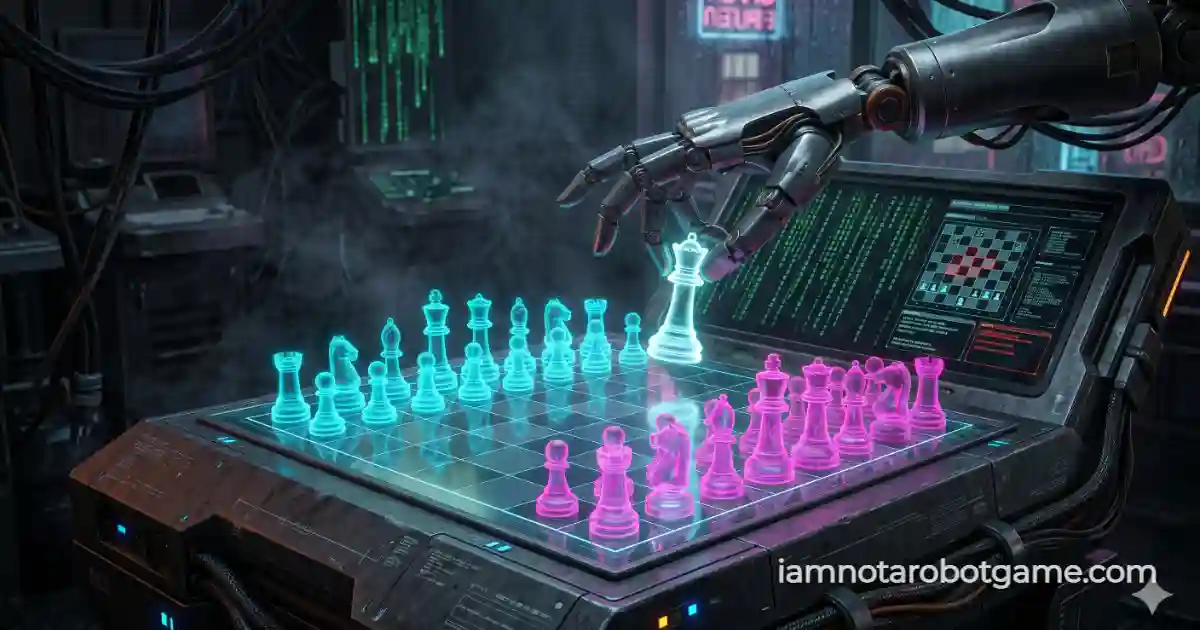
 Fig 1: The DOM-less holographic canvas chess matrix evaluating tactical pattern recognition.
Understanding Holographic Chess Verification
Welcome to Level 44: Grandmaster. You've proven your spatial reasoning in Level 43: IKEA Assembly. Now, the system evaluates your ability to recognize complex strategic patterns without relying on underlying metadata.
Step-by-Step Mate-in-One Strategy
This is a classic endgame scenario. The Black King is trapped in the corner. Follow this protocol to execute the checkmate:
- Analyze the Board State: The White King is safely positioned on c8, cutting off the Black King's escape squares on the 7th rank.
- Select the White Queen: Your White Queen rests on the b1 square at the bottom of the board. Click and hold to engage the kinetic drag engine.
- Execute the Maneuver: Drag the Queen straight up the B-file. Hover over the b8 square, where a glowing valid-move indicator confirms your path.
- Lock it In: Release the Queen on b8. The engine calculates the board state, triggering a particle burst checkmate and unlocking Level 45: Jessica.
Why Canvas Rendering Defeats Text-Based FEN Scrapers
Standard chess AI (like Stockfish) operates by reading a FEN (Forsyth-Edwards Notation) string. On almost every chess website in the world, the HTML DOM contains a hidden string like k1K5/1Q6/8/8/8/8/8/8 which tells the bot exactly where the pieces are.
Visual Piece Recognition vs Automated Logic
In Level 44, there is no FEN string. There are no <div> elements for the squares. The entire board and its pieces are rendered pixel-by-pixel inside an HTML5 <canvas>. To an automated scraping script, this webpage appears as a blank black rectangle.
A bot cannot calculate a checkmate if it literally cannot "see" the pieces. Only a human eye can process the visual pixels, recognize the abstract unicode symbols as chess pieces, and perform the required spatial maneuver.
Frequently Asked Questions
How do I beat the Grandmaster level?
You must drag the White Queen from the bottom of the board (b1) to the top row (b8) to checkmate the Black King.
Why is playing a simple chess move a Turing Test?
Chess bots rely on reading text-based FEN or PGN strings embedded in a website's code. This board is drawn pixel-by-pixel on a blank Canvas, leaving bots completely blind to the pieces.
Why does the piece snap back when I drop it?
The engine only accepts the singular optimal move (Mate in 1). Any other move is considered suboptimal and is rejected by the kinetic physics engine, forcing the piece back to its origin.