
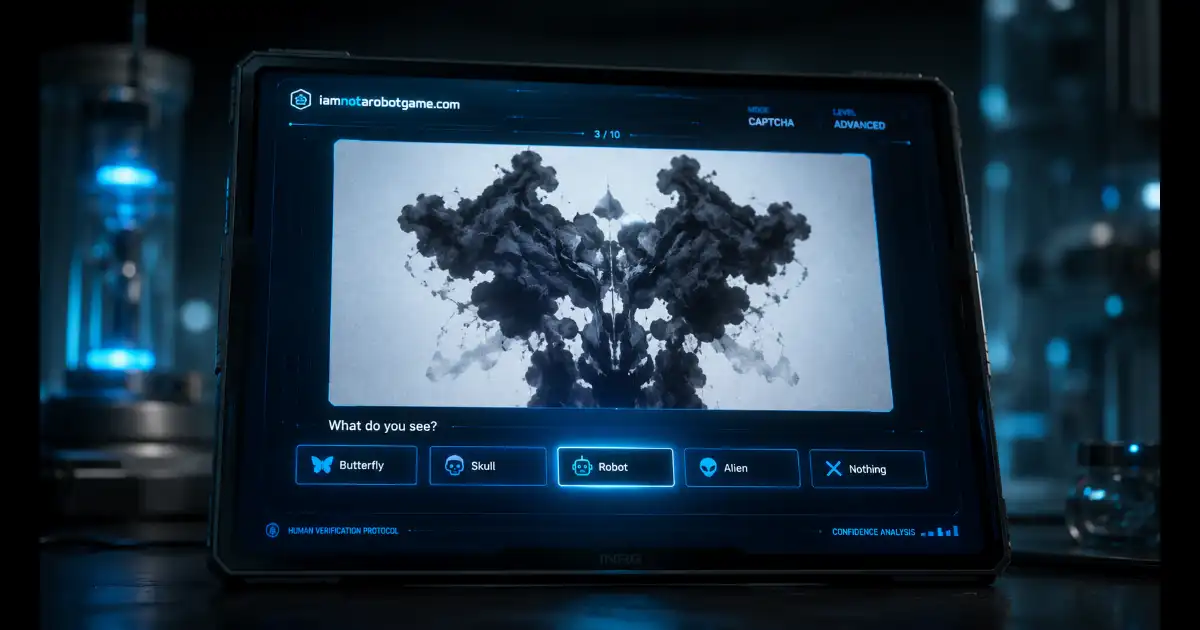
 Fig 1: The procedurally generated, symmetrical inkblot evaluation matrix.
Understanding Psychological Perception Testing
Welcome to Level 20: Rorschach. After surviving the sensory deprivation tank, the matrix now targets your subconscious. Level 20 Rorschach is a psychological Turing test designed to evaluate abstract human perception over raw logic. While previous stages tested physical reflexes, spatial orientation, or precise typing, this stage challenges your capacity for subjective imagination and emotional association.
Step-by-Step Psychological Evaluation Strategy
The verification terminal renders a clean paper-white canvas framing a procedurally generated, symmetrical black inkblot. Below the canvas, four multiple-choice options present competing interpretations of the abstract shape. To clear the psychological matrix successfully, execute this evaluation protocol:
- Examine the Symmetrical Inkblot: Study the dynamic curves of the inkblot rendered on the digital canvas. Note its bilateral symmetry and organic fluid boundaries.
- Review the Four Multiple-Choice Options: Read the choices provided below the canvas. Three options will contain creative, imaginative human interpretations (such as soaring eagles, butterflies, or dancers), while one option will describe the shape purely as a literal data structure.
- Select a Subjective Interpretation: Choose any of the imaginative, emotional human answers. Avoid the literal geometric answer at all costs.
- Confirm Consciousness: Clicking an imaginative option instantly verifies your organic cognition, records your response time, and unlocks Level 21: Craftcha.
Why Abstract Art Defeats Algorithmic Bots
Bots possess processing power but lack imagination. An automated script cannot interpret abstract shapes or appreciate ambiguity; it only parses metadata and literal strings. If you select the literal, robotic description (the "Bot Trap" such as "Bilateral #000000 Pixel Array"), the system flags your lack of organic consciousness and resets the matrix.
This sophisticated layer builds upon the behavioral biometrics established earlier in the game, evaluating your mind rather than your mouse.
Procedural Bezier Curves and Canvas Mirroring
This evaluation utilizes the HTML5 Canvas API combined with an algorithmic mirroring function to generate unique Rorschach test inkblots dynamically. Because the shapes are entirely random and never repeat, machine learning models cannot rely on pre-trained image datasets to classify them. You must use true organic imagination to pass.
Frequently Asked Questions
How do I beat the Rorschach level?
Select any abstract, emotional, or imaginative description from the multiple-choice list. Avoid the literal geometric answer.
Why did I fail when I clicked the pixel array option?
That is the "bot trap." Recognizing the image merely as symmetrical pixels proves a lack of human imagination and fails the test.
Does the inkblot change every time?
Yes. The JavaScript engine generates a completely unique, randomized bezier-curve array every time the page loads.
Can a machine learning model solve this?
Standard bots cannot. Even advanced AI struggles because the "correct" answer relies on subjective psychological association rather than objective fact.